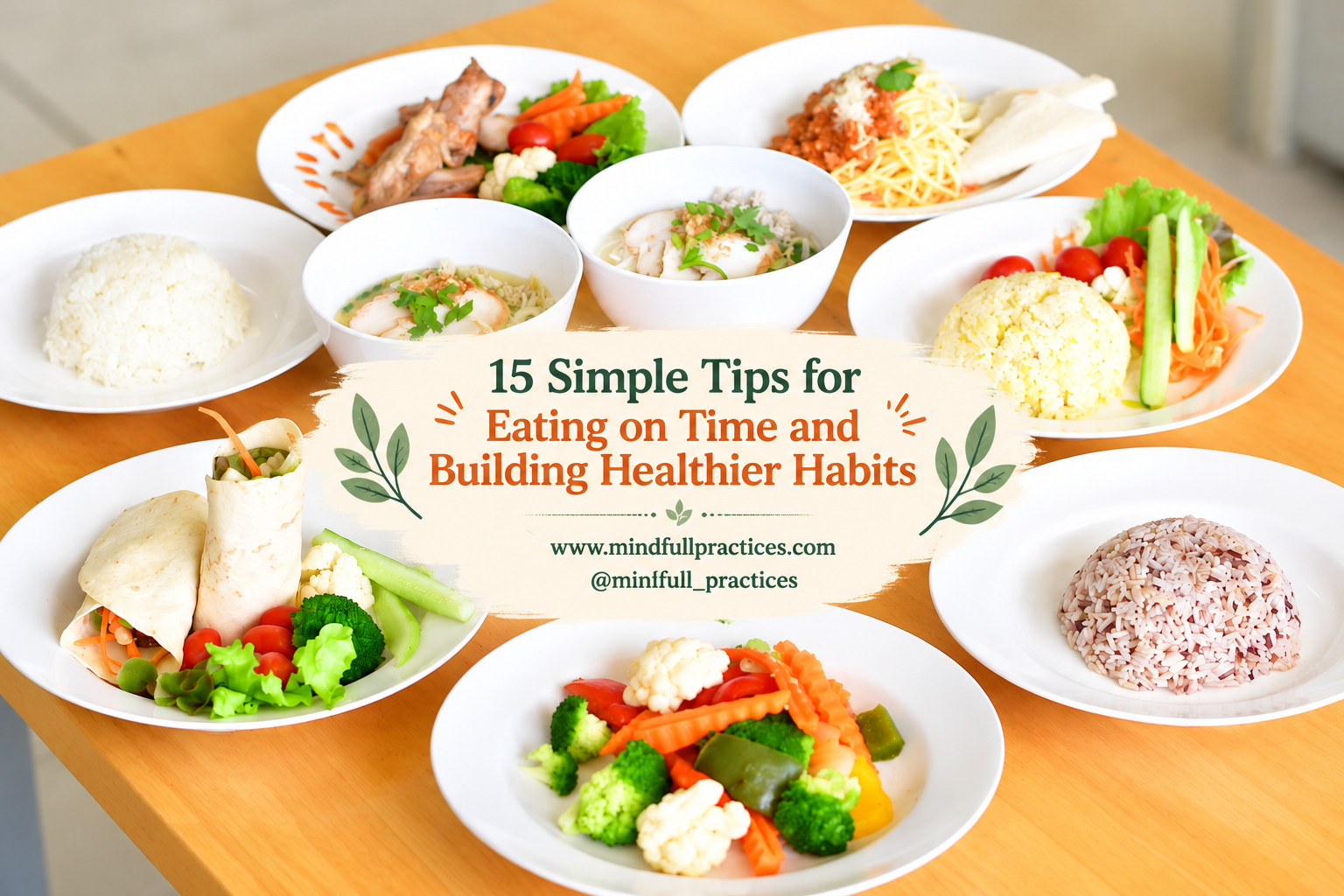
15 Simple Tips for Eating on Time and Building Healthier Habits
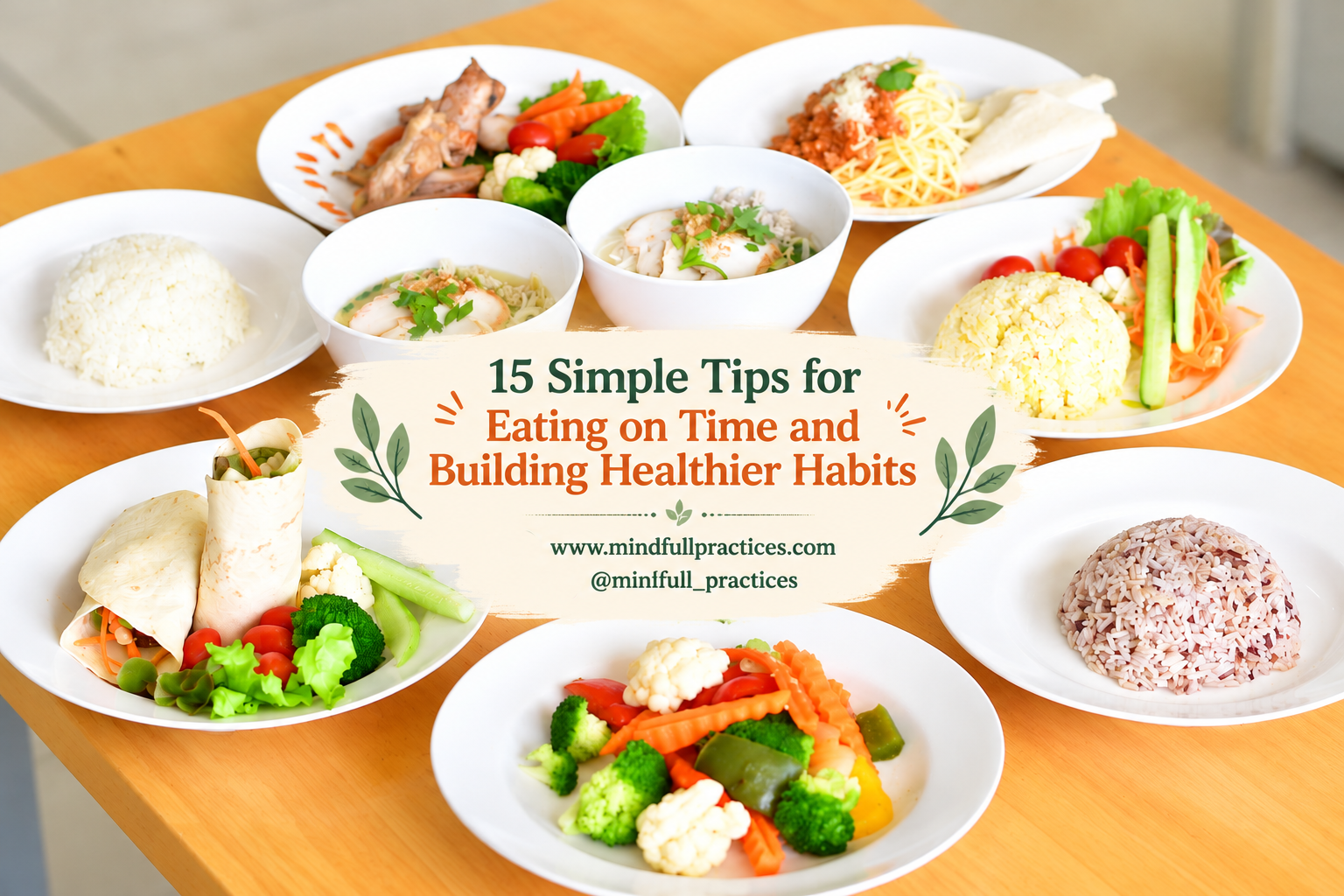
Eating on time seems like a simple habit, but it is not always easy to follow. With work, household tasks and other daily responsibilities, we sometimes become so busy that we forget about our meals.
Before we realise it, lunchtime has already passed. This can affect our energy levels and even the food choices we make later in the day. Having meals at regular times may help us develop healthier eating habits and avoid unnecessary snacking, which could also save some money.
Of course, every day is different, and following the same schedule may not always be possible. A few small changes can still make things easier. So, let us explore 15 simple tips that may help us manage our mealtimes a little better.
Here are 15 ideas worth considering.
1. Recognise When You Usually Feel Hungry
Have you noticed that you tend to feel hungry around the same time each day? When you pay attention to your hunger, you may begin to understand how your appetite changes according to your daily activities.
For instance, a long walk or a jogging session may leave you feeling hungrier than usual. On some days, you may need your next meal a little sooner, while on others, your usual schedule may suit you perfectly well.
Recognising these differences can help you choose suitable mealtimes instead of waiting until you become extremely hungry.
2. Notice Changes in Your Energy
Food gives our bodies the energy needed for everyday activities. When a meal is delayed for several hours, some people begin to feel tired or find it harder to concentrate.
This tiredness may become noticeable while working or studying, even after a good night's sleep. Hunger is not always the reason for feeling tired, of course, but it is worth considering when you have missed your usual meal.
3. Be Aware of Unplanned Snacking
Imagine that lunch has been delayed and you are already quite hungry. A packet of crisps or a few biscuits may seem like the easiest option. Sometimes, one snack leads to another.
By the time you are ready for a proper meal, you may have less appetite. Snacks can be useful, but relying on them too often may mean missing out on the variety of nutrients found in a balanced meal.
4. Consider Your Portion Size
The amount of food we serve ourselves can change depending on how hungry we feel. After a long gap between meals, it may be tempting to fill the plate more than usual.
Starting with a moderate portion gives you time to see whether you need more. If you are still hungry, you can take another helping. It is a simple way to pay attention to your appetite without making portion sizes complicated.
5. Give Yourself Time to Eat
A delayed meal sometimes becomes something we have to finish quickly before the next task begins. Perhaps you have only a few minutes before leaving the house, so you eat while standing in the kitchen.
It happens. But when possible, allow enough time to sit down and enjoy your food. Even an ordinary lunch can feel more comfortable when there is no immediate pressure to finish.
6. Make Mealtimes Part of Family Life
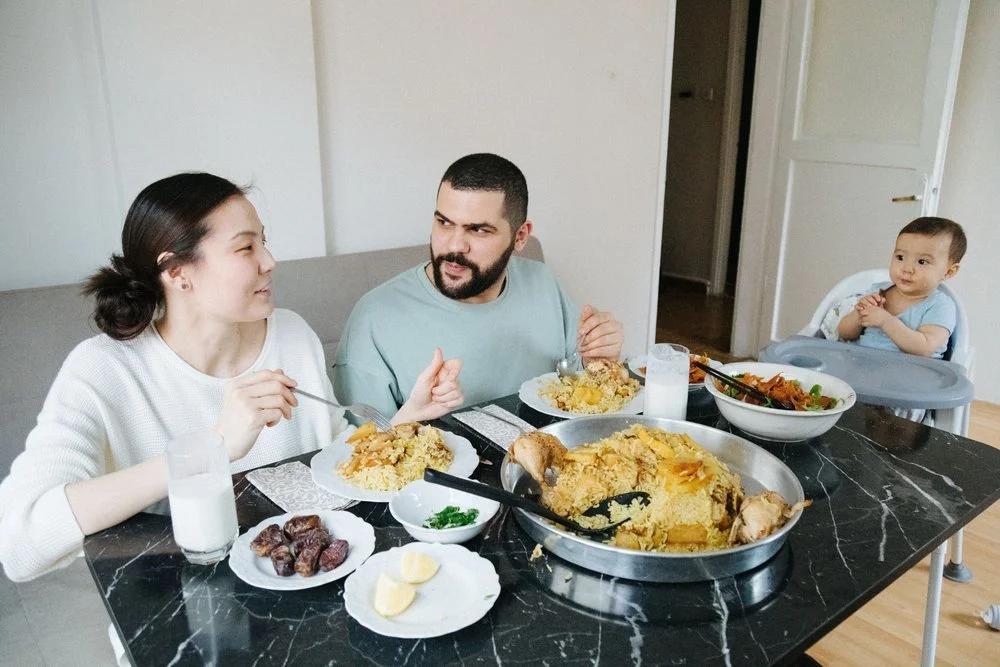
For families with young children, a familiar meal schedule can make the day easier to manage. If dinner is usually at 6 p.m., playtime or bath time can be arranged around it.
When family members have similar mealtimes, there may also be more opportunities to eat together. Sitting at the same table gives parents and children time to talk about their day. These small conversations can become a valuable part of family life.
7. Think About Your Morning Routine
The time you wake up can influence the rest of your day, including when you have breakfast. On mornings when you wake much later than usual, lunch may also be pushed back.
If this happens frequently, consider whether a more consistent waking time would suit your routine. Even on busy mornings, allowing some time for breakfast may help prevent the rest of your meals from becoming unnecessarily delayed.
8. Decide What to Cook Before You Become Hungry
Sometimes, the most time-consuming part of preparing a meal is deciding what to make. You open the fridge, check the cupboards and then realise that an important ingredient is missing.
A little preparation can help. You could decide on your meals for the week, or simply choose what to cook the following day. There is no need for a complicated plan. Knowing what you intend to prepare can save those last-minute decisions.
9. Use a Reminder if You Often Lose Track of Time
It is easy to become absorbed in an activity and forget that lunchtime is approaching. A phone reminder can be useful in this situation.
For instance, if you usually have lunch at 1 p.m., set an alarm for 12:50 p.m. This gives you a little time to finish what you are doing. If the task requires longer, you can return to it after your meal.
10. Choose Easier Recipes on Busy Days
Some dishes need considerable preparation, and there are days when we simply do not have enough time for them.
If lunch is only half an hour away, a recipe that takes an hour may not be the most practical choice. Keep a few simple meal ideas for busy days. Save the longer recipes for occasions when you have more time to cook.
11. Check Your Schedule Before Booking Appointments
Appointments can sometimes fall close to lunch or dinner. When you have a choice of time slots, it is worth checking which one fits your day more comfortably.
Of course, medical appointments and other important commitments cannot always be arranged around meals. But when several options are available, a little thought beforehand may prevent an unnecessary delay.
12. Allow Enough Time When Ordering Food

Ordering takeaway can save the effort of cooking, but the food may take longer to arrive than expected. Preparation times vary, especially during busy evenings.
If you normally eat dinner at 7 p.m. and delivery takes about 40 minutes, consider placing your order well in advance. It is also sensible to allow a little extra time for possible delays.
13. Consider Your Meals Before Exercise
Activities such as swimming, playing badminton or going to the gym may require some thought about meal timing.
A large meal immediately before exercise can cause stomach discomfort. For this reason, it is generally better to allow a few hours after a heavy meal before starting your session. If you feel hungry closer to the activity, a light snack may be more comfortable.
14. Agree on a Suitable Time When Inviting Guests
When friends or family are coming for lunch or dinner, agreeing on a time beforehand can make arrangements easier for everyone.
Sometimes, guests may prefer to arrive later than you would normally eat. In that case, having a small meal or snack earlier may be helpful. You can then enjoy the gathering without becoming excessively hungry while waiting.
15. Be Flexible When Plans Change
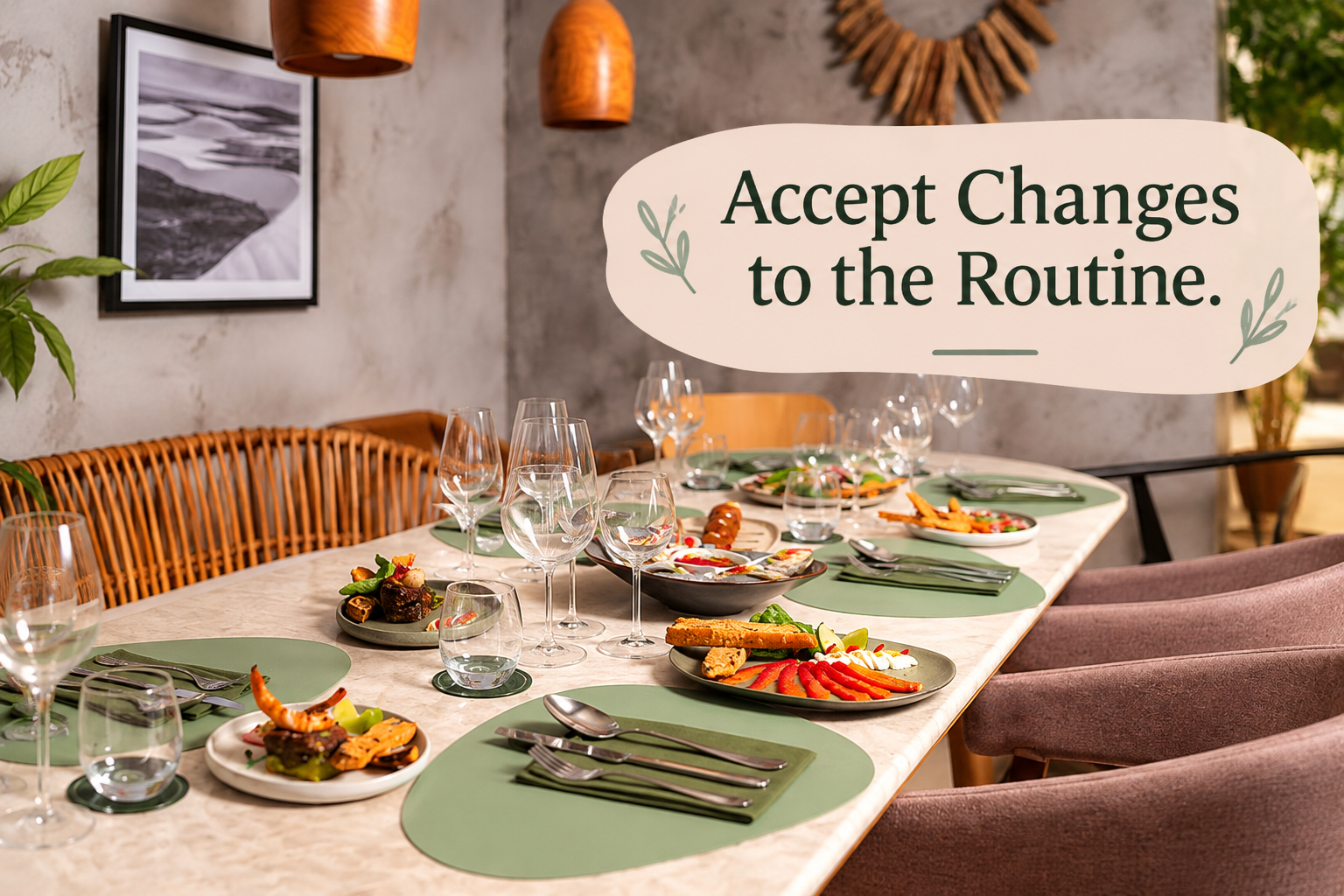
Even with a familiar routine, some days will be different. Holidays, celebrations and unexpected commitments can affect when we eat.
If your usual mealtime changes occasionally, make a practical adjustment based on the situation. A routine should be useful in everyday life, and it can be adapted when circumstances change.
Final Thoughts
Start with a few small changes that suit your lifestyle. Choose what works for you and make adjustments as needed.
I am still learning how to develop better habits in my own daily routine. Some changes take longer than others, and I believe there is always something new to learn. I hope these ideas are useful as we continue making small improvements together.
I look forward to sharing another self-care topic with you soon.
A Gentle Closing Note
There is always more to explore when it comes to living simply and mindfully.
Feel free to visit the Home page. It’s where you can explore book reviews, self-care, simple joys, Smart spending , spiritual reflections to organization hacks and Time management, —These are some of the everyday topics I enjoy exploring and writing about.
If you found these ideas helpful, feel free to share the article or subscribe for future posts. Your feedback is always welcome.
Thank you for reading until the end. Until next time, stay well and keep learning.
Related Posts